

Radon and air quality monitors: what a combined unit measures
A radon reading and a general air quality reading answer different questions. A combined unit carries one radon channel alongside the usual gas and particulate channels, so buyers need to know what each part actually measures.
What the Radon Channel Adds
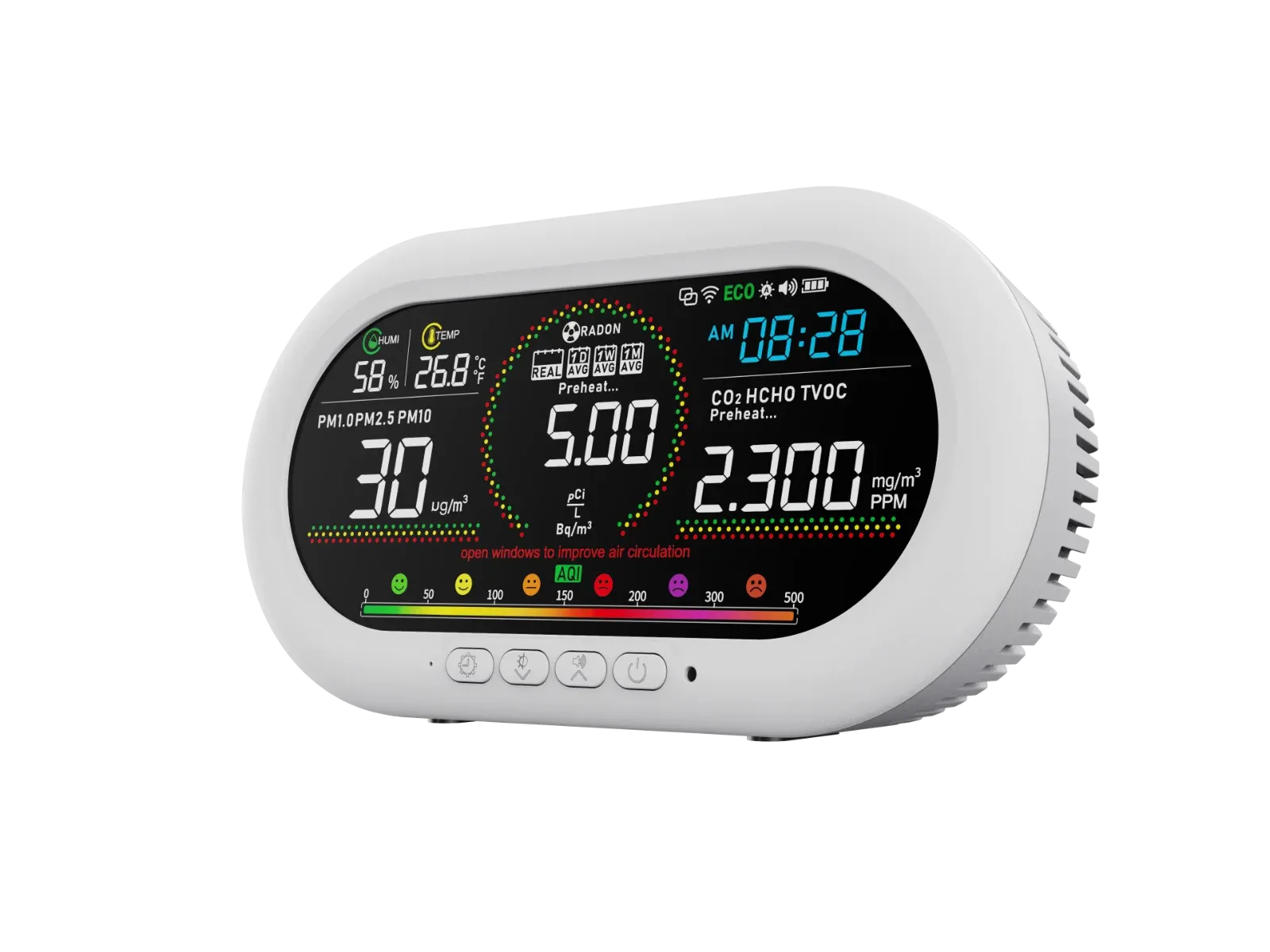
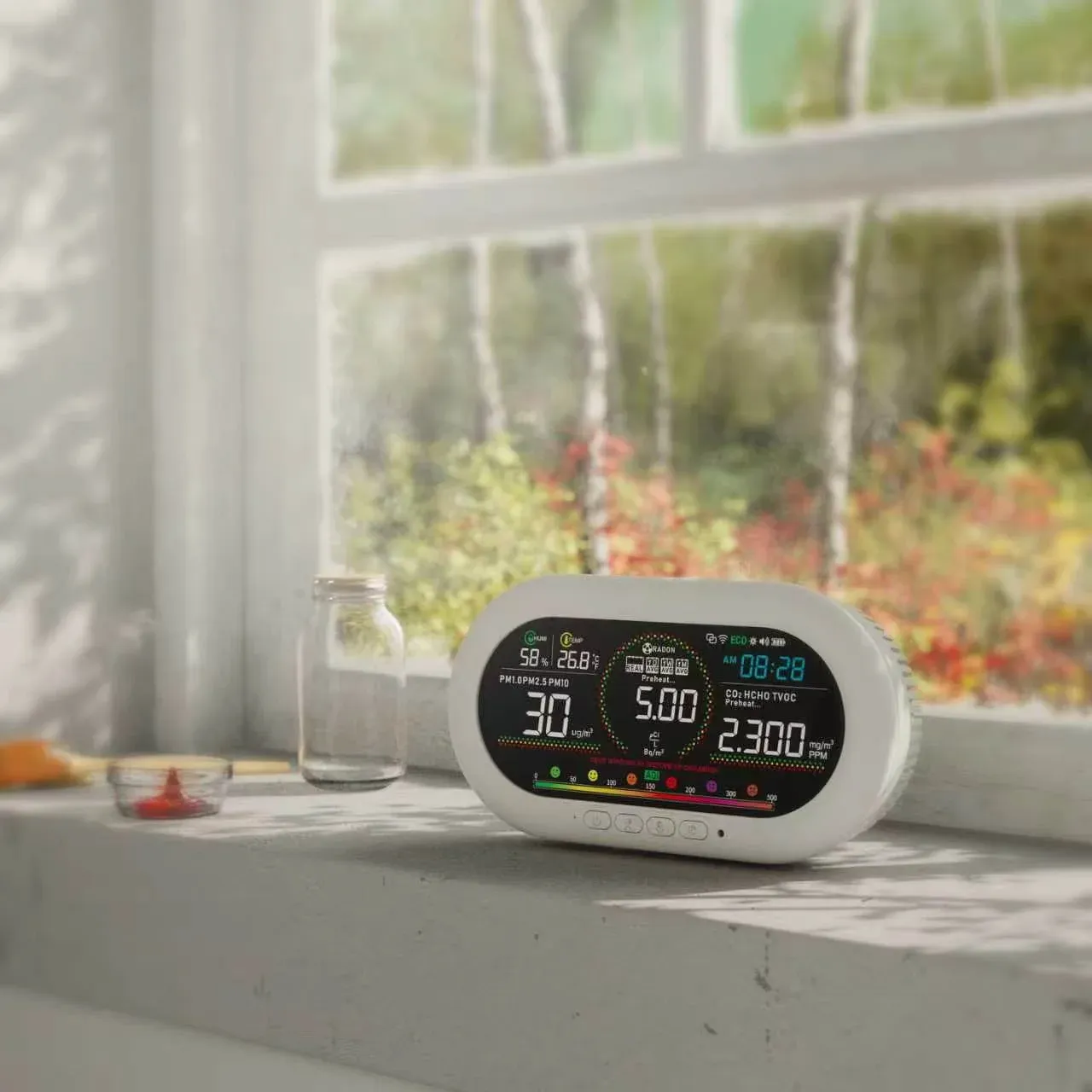
The AK29 is the radon model in this range, and it pairs radon with a full indoor air set: CO2, PM1.0, PM2.5, PM10, HCHO, TVOC, temperature, humidity, AQI and time. That is a different proposition from a single-gas meter, because the radon figure sits beside the readings that describe ventilation and comfort in the same room.
The radon channel is described as optical sensing, and the same unit reports particulates, gases and climate values. For a buyer specifying one device per room, that means one installation footprint covering both the radon question and the everyday air quality question.
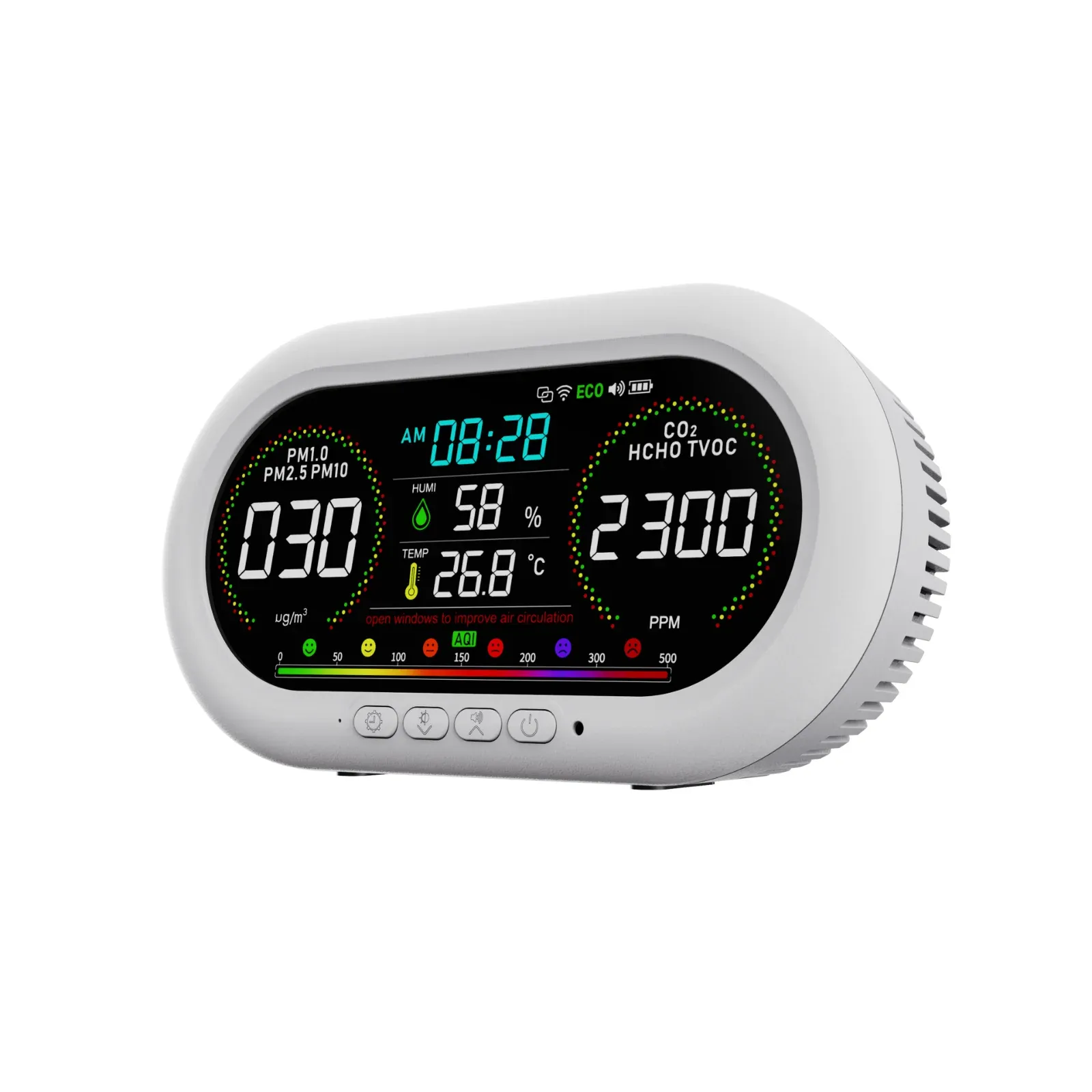
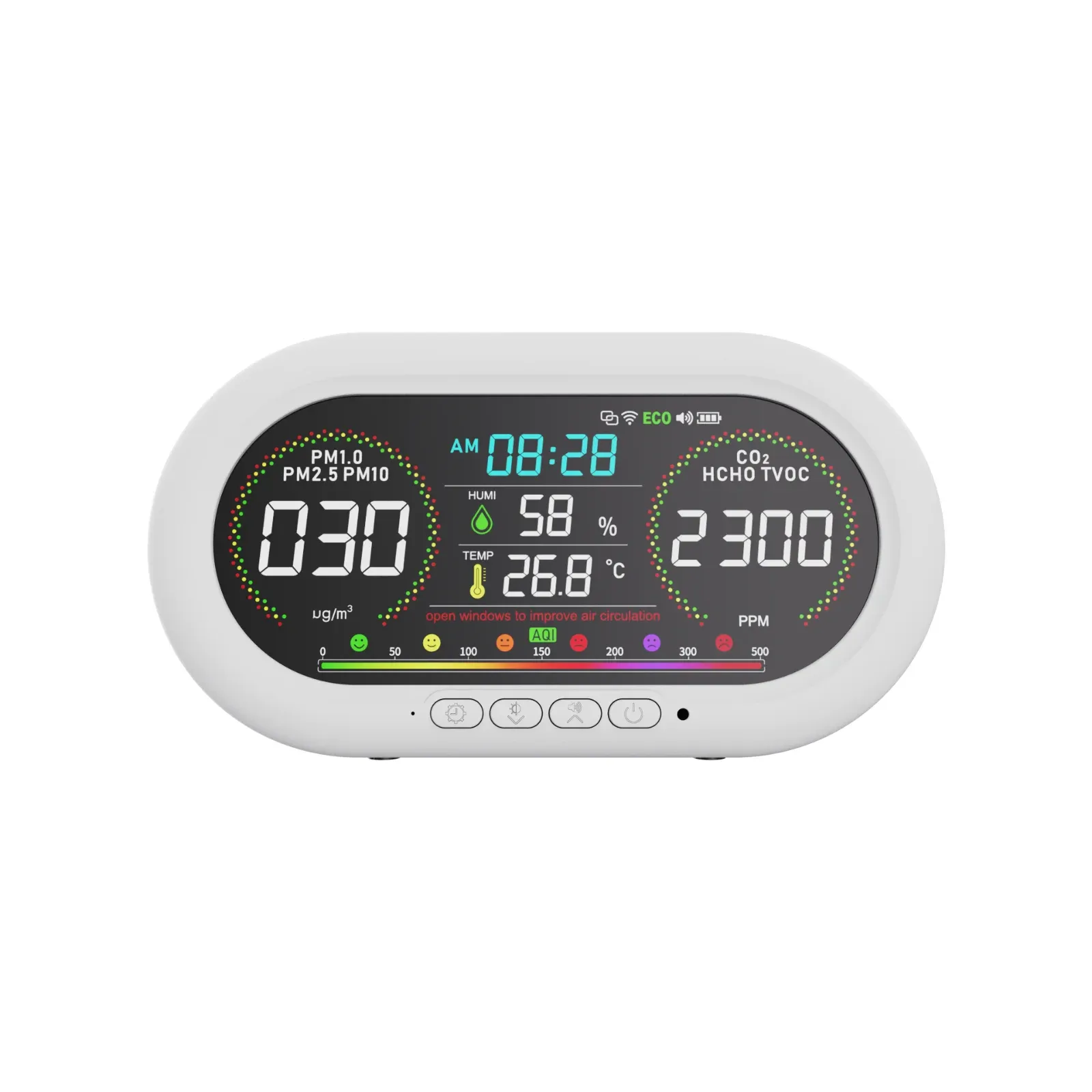
The AK30 shares the same enclosure as the radon flagship, so a customer can move between the two without a change in installation footprint. The AK30 carries eight parameters with a full particulate split and an auto-dimming display, but no radon channel.
How the Other Channels Sense
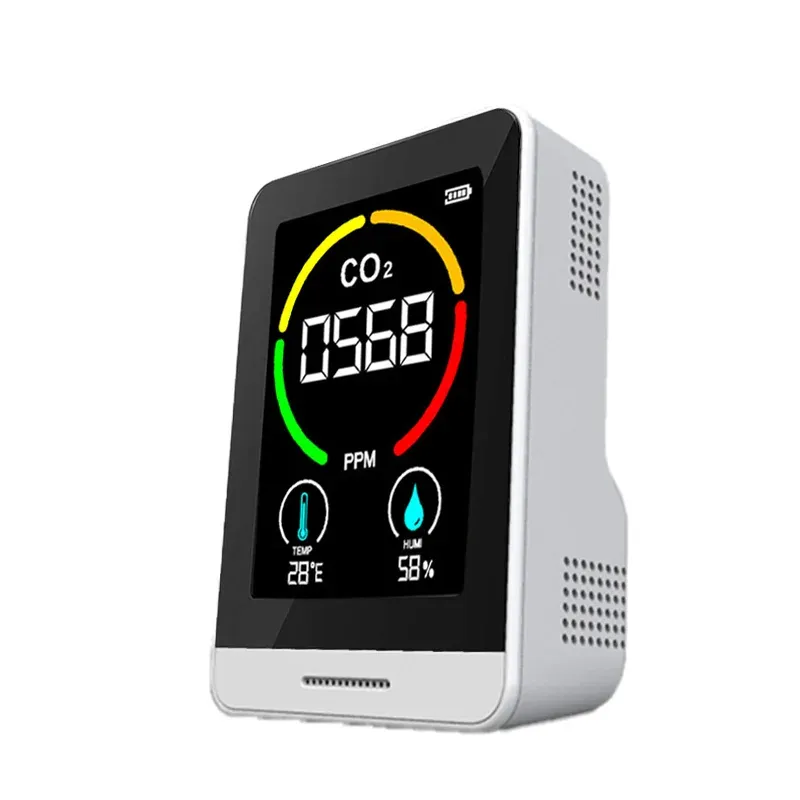
The gas and particulate channels in this family use different sensing principles, and the choice changes what a reading is worth. Infrared NDIR responds to CO2 and nothing else, so cooking vapour, hand sanitiser and air freshener leave the reading untouched — which is what makes a ventilation decision defensible.
Laser particle counting uses a scattering module with a fan-drawn sample path, the sensor class that produces a µg/m³ figure worth acting on rather than an inferred estimate. On models such as the AK16A, PM1.0, PM2.5 and PM10 are reported separately, because a single lumped particulate number hides which fraction is elevated.
Formaldehyde is measured electrochemically on the AK11C, where an electrochemical cell responds to formaldehyde specifically and holds its reading over months rather than hours. Temperature and humidity sit alongside because formaldehyde release rises sharply with both, so the two readings explain why a level moved.
- Semiconductor CO2 sensing tracks rise and fall for occupancy and window-opening prompts.
- Infrared NDIR gives a CO2 figure stable enough to quote and compare month to month.
- Electrochemical cells are used for formaldehyde and for carbon monoxide.
What a Combined Unit Cannot Tell You
A combined monitor reports concentrations; it does not replace a dedicated safety device. On the AK16D-CO, carbon monoxide is added through an electrochemical cell, and the unit is positioned as a monitor with continuous sited monitoring and an on-screen alert. Where local regulations require a listed CO alarm, it sits alongside one rather than replacing it.
The same logic applies to radon. A combined unit gives you a number in the room, on the same screen as the ventilation and comfort readings, but the buyer should read the radon channel as one input rather than a substitute for whatever local rules require.
Sensor class also sets the limits of comparison. A semiconductor CO2 element tracks the direction of change; an infrared channel produces a figure you can set against one taken a season earlier. Mixing the two across a building makes the numbers hard to compare.
Specifying and Rolling Out
Decide first whether radon is required in every room or only in the rooms where it matters, then choose the rest of the configuration around that. The AK29 carries radon with the full parameter set; the AK30 offers the same body without it.
For multi-room deployment, check the carton and enclosure details on each model's spec sheet, along with the certifications listed there for that model. Certifications are shown per model on its product spec sheet, so confirm the exact model before you commit a programme.
Where a report has to name rooms and times, data logging changes the workflow. The AK33 stores its own record on board, so it logs whether anyone is in the room or not, and the AK34 records both 24-hour and 15-day trend history.
- Match the sensing class to the decision: trend for occupancy, NDIR for a quotable CO2 figure.
- Keep the radon channel and the general air channels on one device where room count is the constraint.
- Confirm the certification list on each model's spec sheet before finalising a programme.