

How to choose display and logging options on IAQ monitors
Display and logging choices decide how a monitor is used in a room: what occupants see at a glance, and what a facilities team can review later. This guide compares the options across the AirSonde range.
Match the face to the room
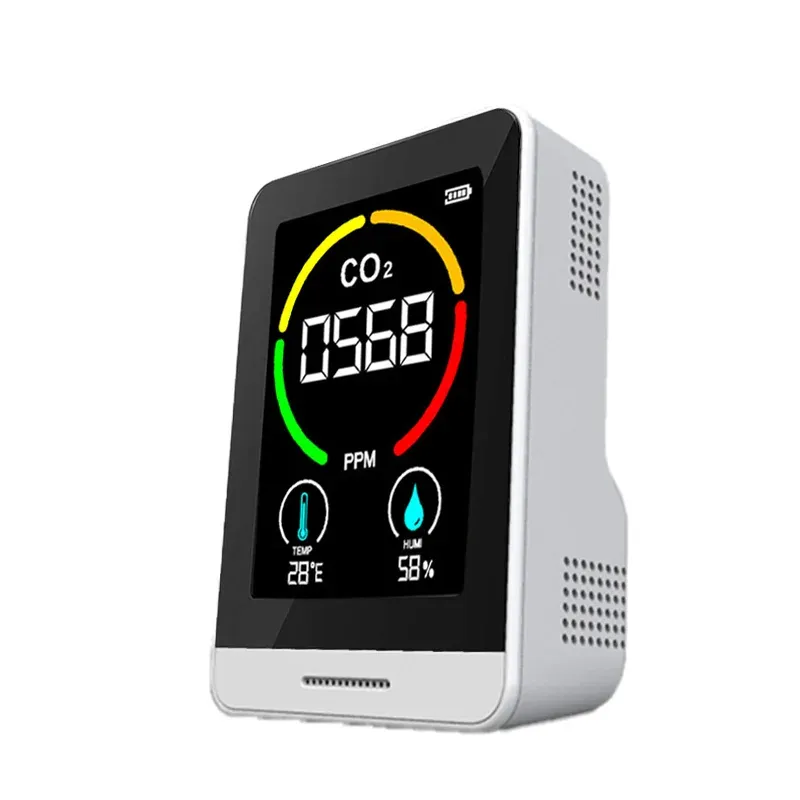
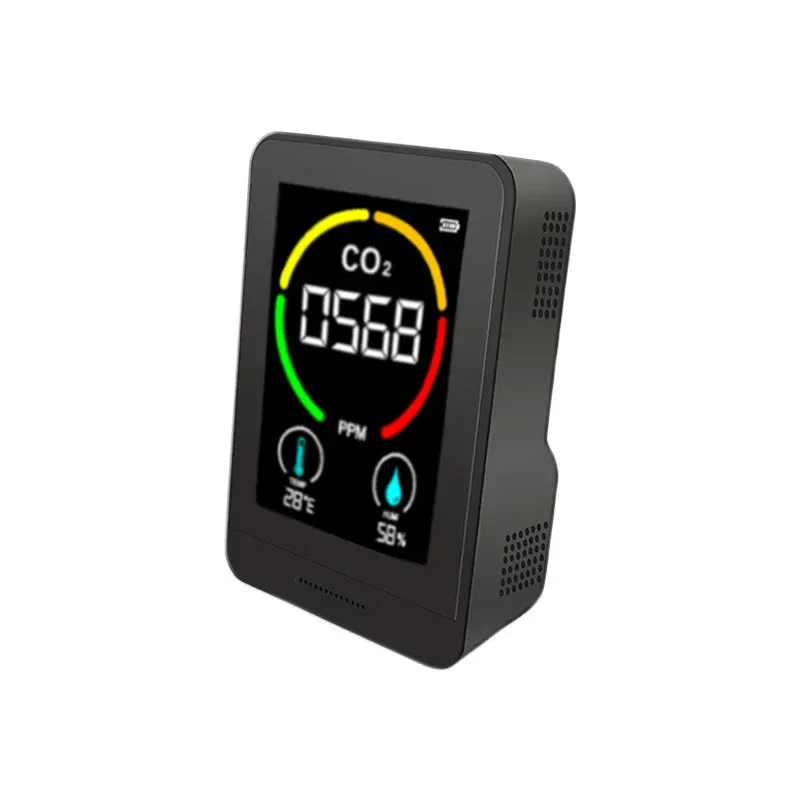
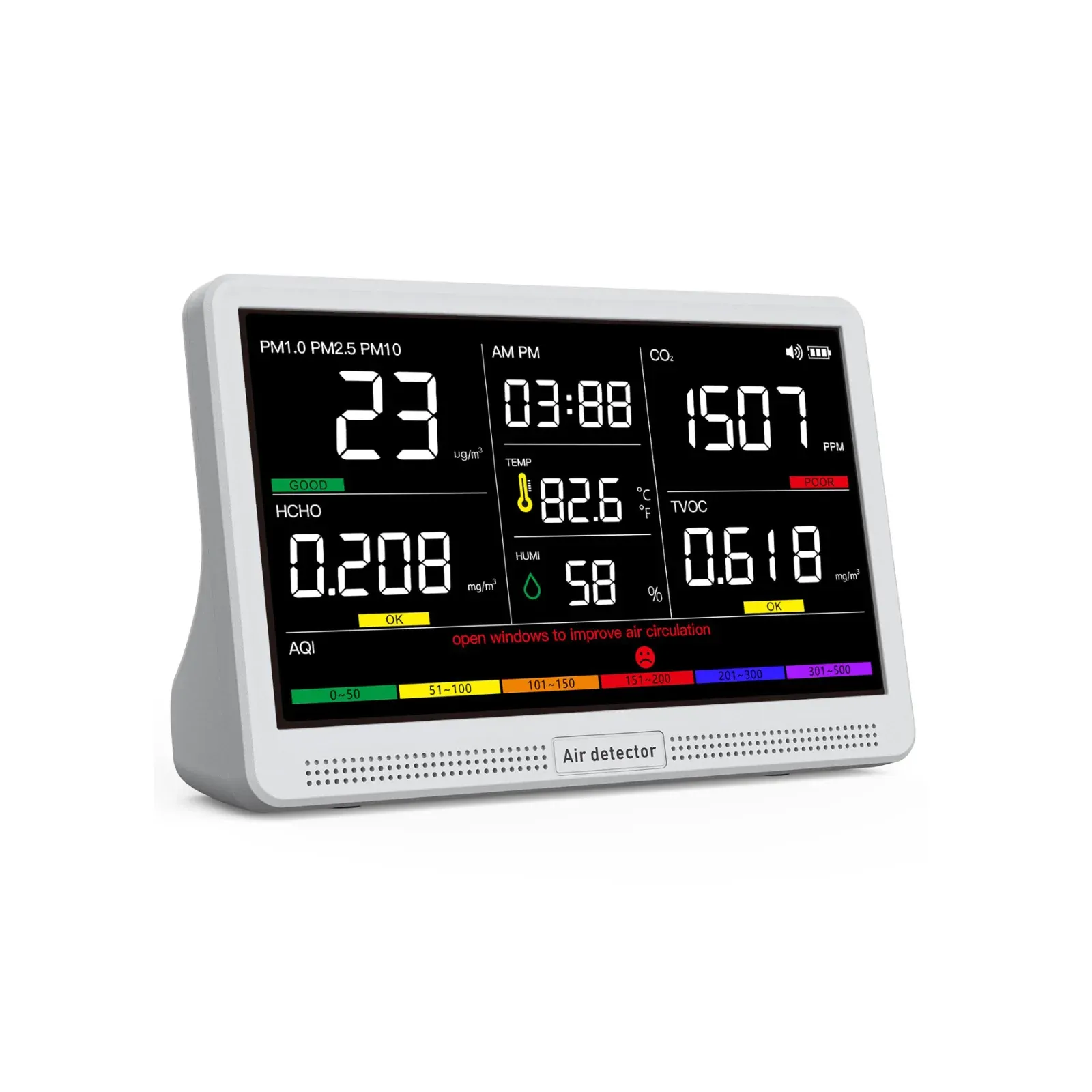
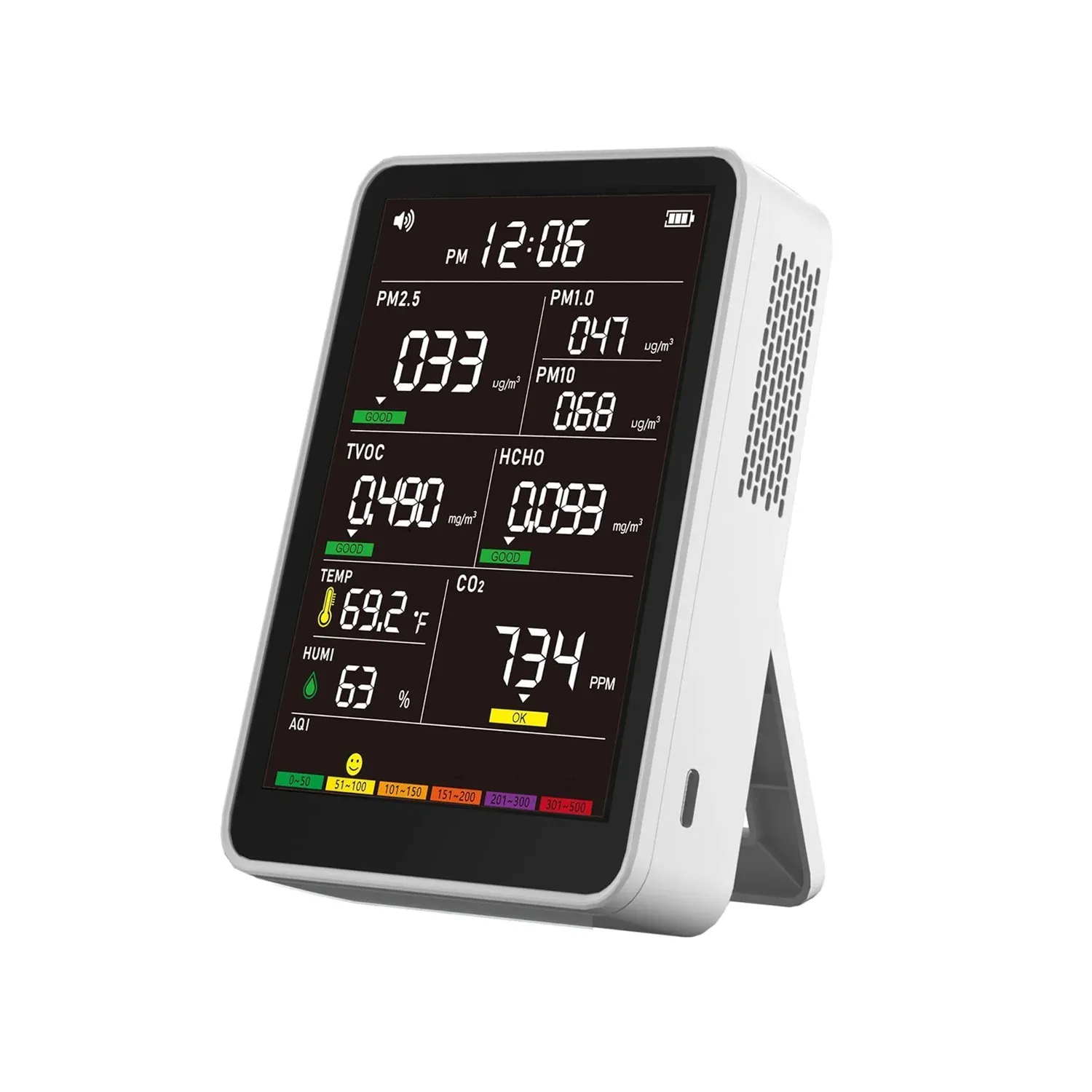
The first decision is who reads the screen and from how far. A single-value arc display suits a meeting room, where one CO₂ figure and a colour band register from the doorway. A grid face suits a technician scanning several parameters, which is why the AK22A tiles six values with equal weight.
Where occupants should not need to interpret numbers, an index layer helps. The AK16C collapses eight readings into a single AQI figure on a colour scale while keeping every underlying value on screen. The AK23A goes further with a six-step colour and expression scale beneath its twin dials, so a guest reads the air without reading the digits.
For public-facing spaces, presentation matters as much as content. The AK22B puts PM2.5 in a large central ring with a full-width AQI scale beneath, a face intended for a lobby or reception desk. The AK23B takes the opposite approach, giving PM2.5 a single very large reading with the other values grouped around it.
- Single value with colour band: AK8, AK11T
- Full grid for scanning: AK16A, AK22A
- Index-first with detail retained: AK16C, AK16D-CO
- Distance-readable dial or large digit: AK22B, AK23A, AK23B
Readability, dimming and the overnight case
A monitor that shares a room with someone asleep has a different requirement: the screen must not light the room. The AK30 carries an ambient light sensor that drops the backlight as the room darkens, paired with a 5000 mAh battery and eight hours of standby. The AK34 switches automatically between day and night themes across multiple brightness levels.
Physical readability is the other half. The AK22A devotes 166 × 108 mm of body almost entirely to display, sized to be read standing up from across a room. The AK35 uses a 5.5-inch LED display with three brightness settings. At the other end, the AK25A fits five readings into a 98 g body for a nightstand or a car cup holder.
Controls belong in this decision too. The AK23A keeps its controls out of sight for a clean front panel, while the AK28A gives clock, alert, brightness and power their own front keys, and uses a moulded wedge stand rather than a fold-out leg.
Logging: on-board history versus a live reading
Logging separates a survey tool from a display. The AK33 stores its own record on board, so it logs whether anyone is present or not, and it is built for walking a building and reading back where levels changed. That workflow suits consultants and facilities teams who must name rooms and times in a report.
The AK34 records both 24-hour and 15-day trend history, which supports comparing daily changes and identifying pollution patterns. For buyers specifying a device that stays sited, the AK30 is designed to run continuously rather than be picked up and put down.
The AK11P follows particulate changes in real time, which is what makes cause and effect visible when a door opens or a purifier starts. The AK17 shows two data sets simultaneously on one screen, removing manual screen switching during a walk-around.
Alerts and the CO decision
The AK17 sounds a built-in buzzer when concentration reaches the 0.1 mg per cubic meter threshold. The AK35 provides seven distinct AQI alert buzzers with a mute button. The AK34 adds three-colour AQI indicators and audible alarms.
Carbon monoxide needs a separate conversation. The AK16D-CO adds an electrochemical CO cell to the eight-parameter platform, intended for kitchens with gas hobs, rooms with wood stoves or unvented heaters, attached garages and boiler rooms. It is positioned as a monitor with an on-screen alert, and where local regulations require a listed CO alarm it sits alongside one rather than replacing it.
For landlords fitting out multiple units, the AK32A runs on mains indefinitely with no charging cycle to manage, in US and EU pin variants. The AK18A puts an electrochemical CO cell in a 39 g pocket body with audible and visual alert.
Specify the platform, then the face
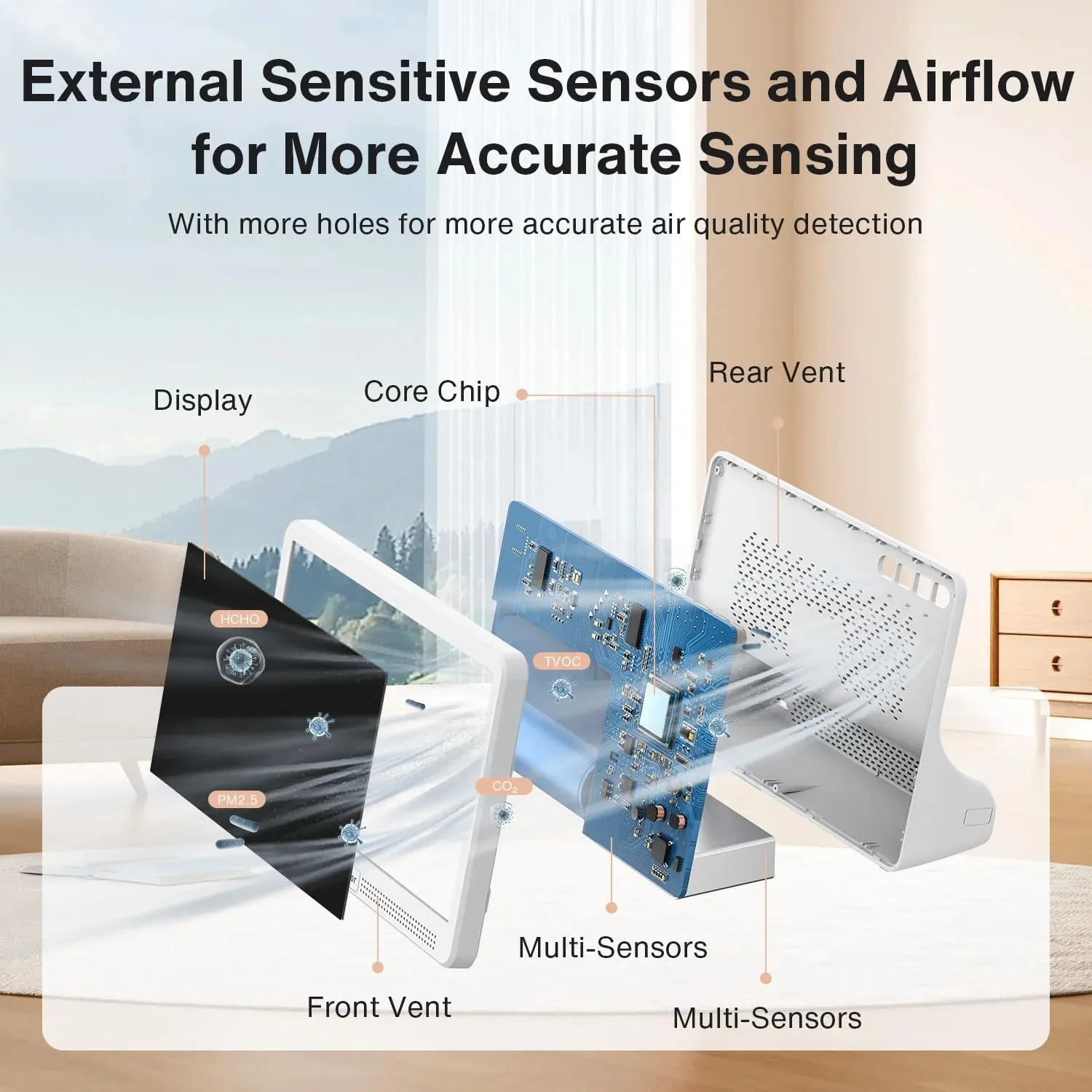
Many of these faces share tooling, which simplifies a catalogue. The AK16A is the entry configuration of an enclosure that also carries AQI display, app connectivity, upgraded sensors and a CO channel. The AK22A and AK22B share identical sensing and enclosure, with the difference entirely in presentation. The AK23A and AK23B share enclosure, packaging and a 32-per-carton spec.
The same logic runs through the compact ranges. The AK3 and the NDIR version AK4 share body, colour box and 50-per-carton pack. The AK25A and AK25AH share an identical enclosure and packaging, with the CO₂ channel moving to infrared NDIR on the AH. The AK11 family shares shell, colour box and 50-per-carton spec across its variants.
Certifications for each model are shown only on its product spec sheet, so check the spec sheet of every model you intend to carry before you commit a range.